War in the Middle East - Airspace Closure – Cold Chain at Breaking Point
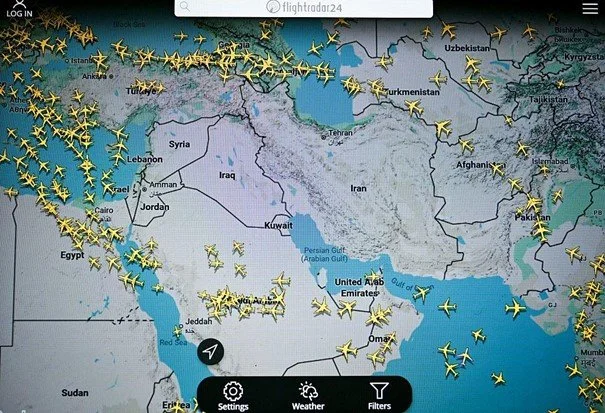
The closure of major Middle Eastern airspace fundamentally alters global pharmaceutical transport flows. With Dubai International and other regional hubs no longer handling international traffic, critical transshipment capacity between Asia, Europe, and Africa is interrupted. These hubs are not peripheral—they are structural pillars of time-critical pharma logistics.
Operational consequences are immediate:
• Long-haul flights forced into extended rerouting
• Loss of key pharma-certified transshipment hubs
• Cargo stranded in origin airports awaiting clearance
• Increased congestion in alternative European and Asian gateways
• Escalating fuel and war-risk surcharges
For temperature-sensitive pharmaceuticals, time deviation equals compliance risk. Biologics validated for 48–72-hour lane profiles now face unpredictable 5–10-day exposure scenarios.
This is where infrastructure-independent passive packaging becomes decisive. Your first line of defense against unfriendly environment has to be best in class. Deltat.de’s systems offer extended thermal autonomy (120–168+ hours validated performance), high-efficiency phase change materials, and controlled temperature ranges suitable for 2–8°C and CRT applications and many more. In scenarios where active containers are unavailable and airport cold rooms are inaccessible, packaging must function as the primary risk barrier.
Airspace closure transforms packaging from a cost factor into a strategic safeguard.
The resilience of your cold chain now depends on preparation and packaging—not optimism.
I invite you to share your professional assessment.
Join our LinkedIn discussion:
https://www.linkedin.com/company/pharma-logistics-services/?viewAsMember=true
Connect with us directly:
https://www.ipharmalogistics.com/contact-us